
Pregnant women often receive a lot of advice about pregnancy diet, exercises to refrain from, and foods and fruits to avoid during pregnancy. While it’s important to be cautious during pregnancy, it’s equally important to rely on the right guidance so you can enjoy this phase with complete peace of mind.
“Are pineapple and papaya safe in pregnancy?” Many expectant mothers often raise this question with their gynecologists. This query needs to be scientifically answered while eliminating any references to folklore or traditional beliefs.
Many pregnancy diet restrictions are based on folklore rather than on medical advice. So, let’s clearly bust the myths and establish the facts on papaya and pineapple during pregnancy.
One common belief is that pineapple consumption during pregnancy may cause miscarriage or early labor. While there is no scientific evidence to support this statement, it is important to understand the fruit and why this myth might have emerged.
The core or stem of the pineapple contains bromelain, an enzyme that breaks down proteins in the body and can lead to abnormal bleeding. However, there is very little bromelain in the fleshy part we eat, making it perfectly safe for you to eat pineapple in moderate quantities during pregnancy.
The amount of bromelain in a single serving of pineapple is not enough to negatively affect your pregnancy in any way. In fact, eating a bowl of fresh pineapple during pregnancy is a healthy source of folate, fiber, iron, hydration, and vitamins B and C, essential for your pregnancy health.
So, is it safe to eat pineapple during pregnancy? Yes, fresh pineapple in limited quantities is perfectly safe in pregnancy. However, like all other foods, too much pineapple is not advisable. Eating too much pineapple can cause acidity or heartburn and blood sugar spikes for women with gestational diabetes.
You can safely enjoy pineapple during pregnancy by :
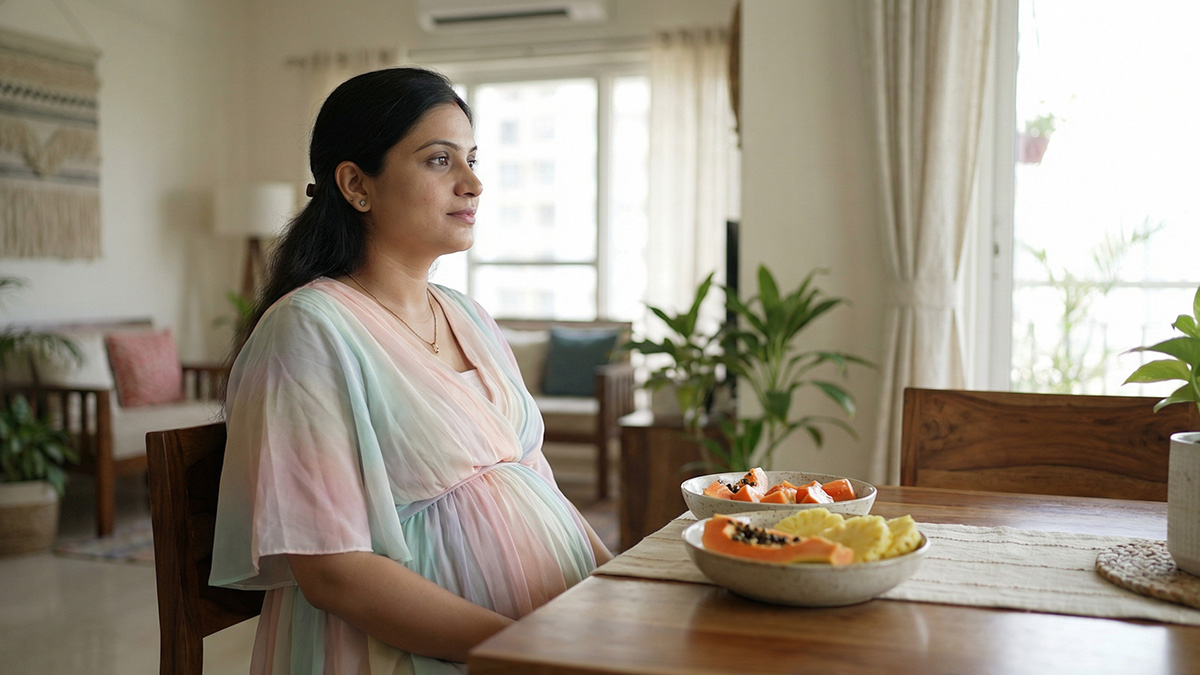
Another common myth among fruits to avoid during pregnancy is the papaya fruit. So, is papaya safe during pregnancy? Well, the concern about eating papaya stems from the fact that unripe or semi-ripe papaya contains latex, which is rich in an enzyme called papain. Papain is known to contain uterine-stimulating effects and can weaken the membrane around the uterus. Doctors may advise you against eating unripe or semi-ripe papaya in pregnancy.
On the other hand, indulging in a bowl of ripe papaya is safe because there is very little to no latex in the ripe fruit. There is no scientific evidence proving that eating a small bowl of fully ripe papaya leads to uterine concerns.
Ask your doctor at Kinder Women’s Hospital, the best pregnancy care hospital in Bangalore, about eating ripe papaya during pregnancy. If your doctor recommends the fruit, then papaya is a good source of vitamin C, folate, fiber, and antioxidants, providing nutritional advantages for your pregnancy health.
At Kinder Women’s Hospital, we have a team of top gynecologists and nutritionists ensuring your pregnancy is a smooth and joyful experience. From a personalized pregnancy diet plan to safe exercise guidance and comprehensive prenatal care, we support you at every step of your journey. Schedule your appointment with us at Kinder Women’s Hospital today for expert pregnancy care.
Ripe papaya eaten in moderate quantities is generally considered safe during pregnancy. However, unripe or semi-ripe papaya should be avoided as it may trigger uterine contractions.
Yes, pregnant women can eat ripe pineapple in small quantities. There is no scientific evidence proving any harm when pregnant women eat ripe pineapple in moderation.
Like all foods, when consumed in moderation and in the right form, both papaya and pineapple are generally safe. However, always consult your doctor for a safe pregnancy diet plan.