
It can be easy to confuse food allergies and food intolerance in children. Understanding the difference between food allergies in children, food intolerance, and food sensitivity in kids is important because food allergies can lead to severe symptoms, including life-threatening risks, while food intolerance and sensitivity cause less severe symptoms. So, identifying your child’s symptoms can help you better manage your child’s condition.
Food allergies affect the immune system. That is, the immune system, which usually fights infections, considers a particular food that is otherwise harmless as an invader of sorts. The immune system fights the food like it would fight a foreign body or infection. It is an immune reaction to food. The signs of food allergies in children can range from symptoms like vomiting, abdominal pain, rashes, lip swelling, tongue swelling and unable to talk properly, throat tightening to eventually difficulty in breathing and drop in blood pressure. Severe food allergies can even cause life-threatening reactions that if not treated immediately can be fatal.
There can be several reasons your child develops a food allergy, including:
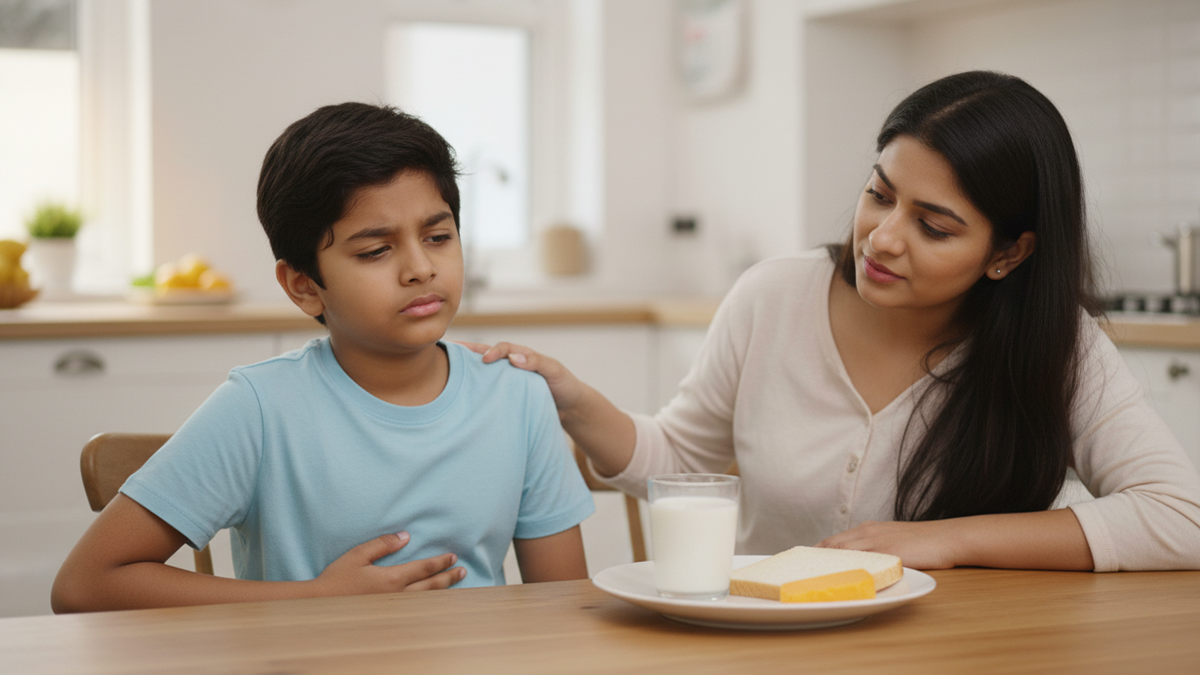
On the other hand, food intolerance or food sensitivity in kids is slightly less severe and usually does not cause life-threatening situations. Food intolerance occurs when the body can not properly digest a particular food. For example, lactose intolerance or intolerance to milk and milk products is common worldwide. In fact, research shows a whopping 65-75% of the world’s population is lactose intolerant.
Although not life-threatening, food intolerance in children can cause symptoms such as bloating, nausea, gas, or headaches.
Food intolerance is usually a result of digestive issues like a deficiency of an enzyme required to break down particular foods. Further food sensitivity in kids can be caused by intolerance to food additives like food coloring or preservatives.
Watch for signs like skin reactions, vomiting, swelling, or breathing problems that may occur within two minutes or two hours of eating. In case you notice any of these signs, visit your child’s pediatrician for further advice. Keep a track of what your child has eaten and share the details with your doctor. Your doctor will conduct more tests to confirm the food sensitivity.
If your child has been diagnosed with a severe food allergy, your doctor may recommend administering an epinephrine auto-injector. For less severe allergic reactions, an oral antihistamine can help minimize the symptoms. However, it is advisable to visit your pediatrician even after symptoms improve. Kinder Hospitals in Whitefield has a team of the best pediatricians in Bangalore offering expert pediatric healthcare services. We have a state of the art pediatric intensive care unit and also a level III NICU catering to the health needs of children, from new-borns to adolescence. Trust Kinder Hospitals in Bangalore for expert pediatric care for your child.